Golf Simulator Wall Padding
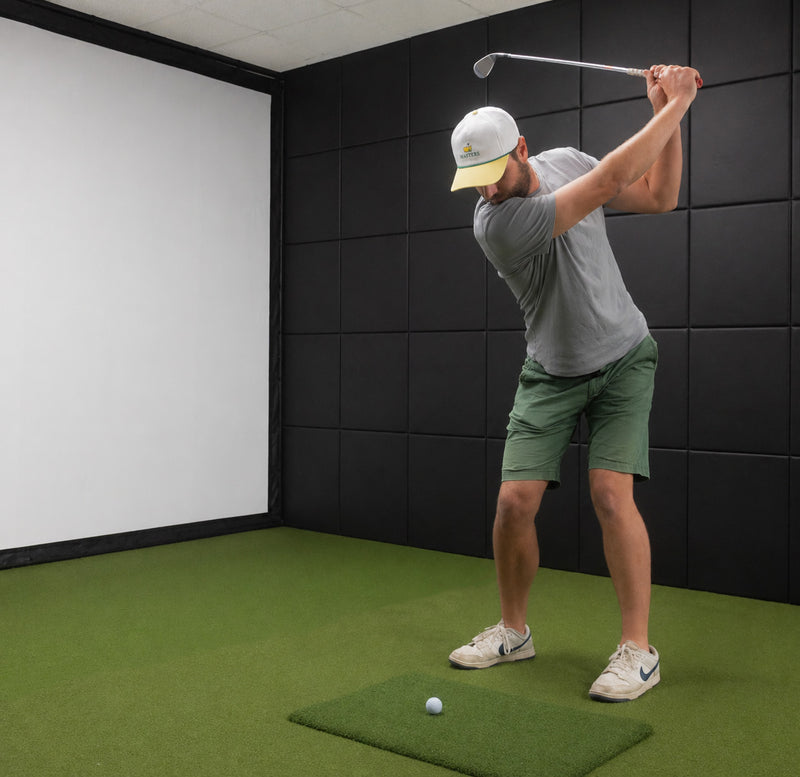
Wall padding protects drywall from stray shots and clubhead nicks, and a matte black finish cuts glare on the screen. Most rooms should start with padding on the walls around the hitting bay, then add acoustic panels where the room still sounds harsh.
Products


 Our pick

Buying guide
What goes on the walls
Most rooms should start with wall padding around the hitting bay. It does two jobs at once. It catches stray shots, ricochets and clubhead nicks before they reach drywall, and its matte black face absorbs light that would otherwise bounce back at the screen and wash out the picture.
This collection covers three ways to finish the walls and ceiling of a sim room:
- Wall padding for impact protection and a darker, sharper picture.
- Acoustic panels for echo and noise inside the room.
- A ceiling curtain track for blackout side coverage without a full enclosure frame.
ROS Signature wall padding
Our wall padding is 2 inches thick, with a dense foam core and a matte black faux leather face that wipes clean with a damp cloth. It comes in three sizes, 12 x 12, 20 x 20 and 24 x 24 inches, so you can frame the screen, fit around outlets and trim, and stagger the pattern. Adhesive Velcro is stitched into the back of every panel, so it peels, sticks and repositions without tools.
It sticks to painted drywall, primed concrete, smooth wood paneling and most painted or sealed surfaces. Skip raw masonry, textured stucco and unprimed surfaces. Most full sim walls run 40 to 80 panels, depending on bay size and how high you want to cover.
Acoustic panels
Acoustic panels absorb the echo from ball impact, club strike and the projector fan. They come in 12-packs of 12 x 12 inch panels in two tiers: Standard foam for behind the screen, and Premium compressed fiber for the walls people see. Most builds use Standard behind the screen and Premium on the side walls. Double-sided tape is included. They quiet the inside of the room, but they do not soundproof it from the rest of the house.
Ceiling curtain track
The RoS Ceiling Curtain Track hangs a blackout curtain from a ceiling-mounted track, 8 ft or 9 ft tall and 10 ft wide, single or double sided. It blocks side light for better projector contrast and slides back when you are done playing, which suits garages and basements that do double duty. Match the curtain height to your ceiling. If you are buying a SwingBay enclosure, it ships with its own blackout side curtains.
Plan the space before you pad it
Padding takes up room. Leave clearance on either side of the screen for the framing and any wall padding, which is part of why a 14 ft wall does not give you a 14 ft screen. Plan on about 1 ft of space behind the screen and 10 to 12 ft from the ball to the screen. Our guide on how to measure your space for a golf simulator walks through each number.
Where this fits
Padding is one of the finishing pieces when you build the room, along with screens and enclosures and golf simulator turf for the floor. If you want the whole room designed and finished, see custom golf simulator rooms. Our design team can lay out the panel pattern around your screen, projector and lighting.
Questions
Common questions
Do I need wall padding in a golf simulator?
It is not required, but it protects drywall from stray shots, ricochets and clubhead nicks. The matte black finish also absorbs light, which helps the projector picture.
How many wall panels do I need?
Most full sim walls run 40 to 80 panels, depending on bay size and how much vertical coverage you want. Send us your room dimensions and our team can lay out the pattern.
Is wall padding the same as acoustic panels?
No. Wall padding is 2 inches thick and built to take impacts. Acoustic panels are thinner and made to absorb echo and noise inside the room.
Will acoustic panels soundproof my sim room?
No. They reduce echo and absorb sound inside the room, but they do not stop sound from leaving it. Keeping noise out of the rest of the house takes changes to the wall construction.
What surfaces can wall padding stick to?
Painted drywall, primed concrete, smooth wood paneling and most painted or sealed surfaces. Avoid raw masonry, textured stucco and unprimed surfaces, and clean the wall before you install.
Do I need a curtain track if I have an enclosure?
Usually not. The curtain track is for rooms without a full enclosure frame, or where a screen is already mounted and you only need blackout side coverage. The SwingBay enclosure ships with its own blackout side curtains.
Reviews
What customers say about Rain or Shine
“Rain or Shine Golf has been amazing. I had questions about the product and they answered right away. They kept me informed throughout the entire process. I would definitely recommend them to anyone.”
“Rain or Shine was great to work with. Answered questions and the delivery was super fast.”
“Great customer service, great communication. Rain or Shine is where I get all of my simulator purchases!”
“My experience with rain or Shine has been outstanding. They were super helpful and quick to respond to any problems I had”
“I always love working with the team at Rain and Shine Golf.”
“Fantastic service. Reached out via chat for an order and had it placed within a few minutes and receive a shipment notification the same day. Highly recommend Rain or Shine!”
Free design consultation
Not sure which one fits your room?
Book a free design consultation. Share your room size and how you want to play, and we will help you pick a setup that fits.
Sim Builder
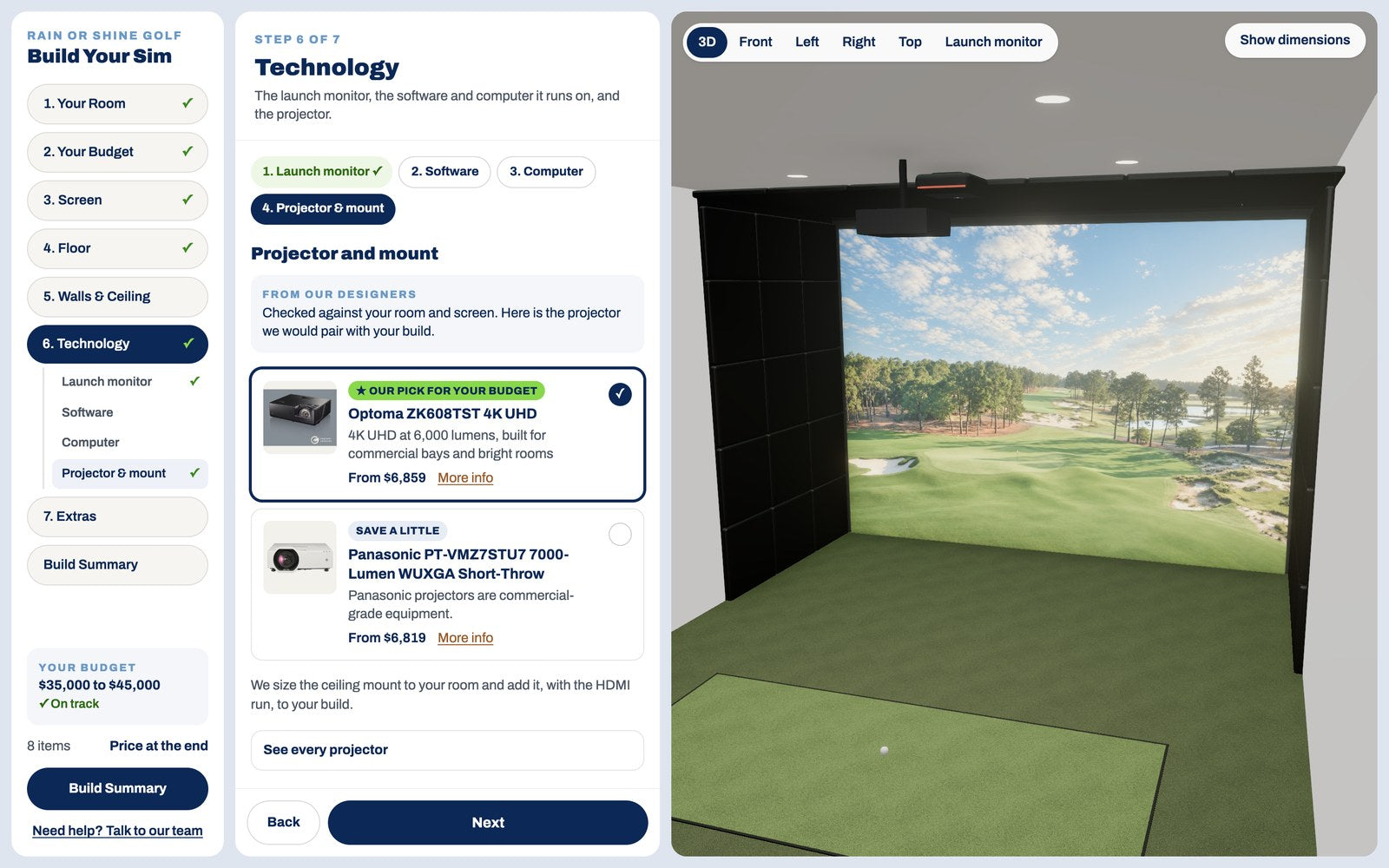
Build your golf simulator
Start with your room, then pick every piece in the order a room gets built. Everything is checked against your space, so nothing lands in your cart that won't fit. Watch it come together in 3D, then send it to a designer for a quote.
- Your room
- Technology
- Screen and enclosure
- Turf and flooring
- Room finishings
- Next-level accessories